
Long jump
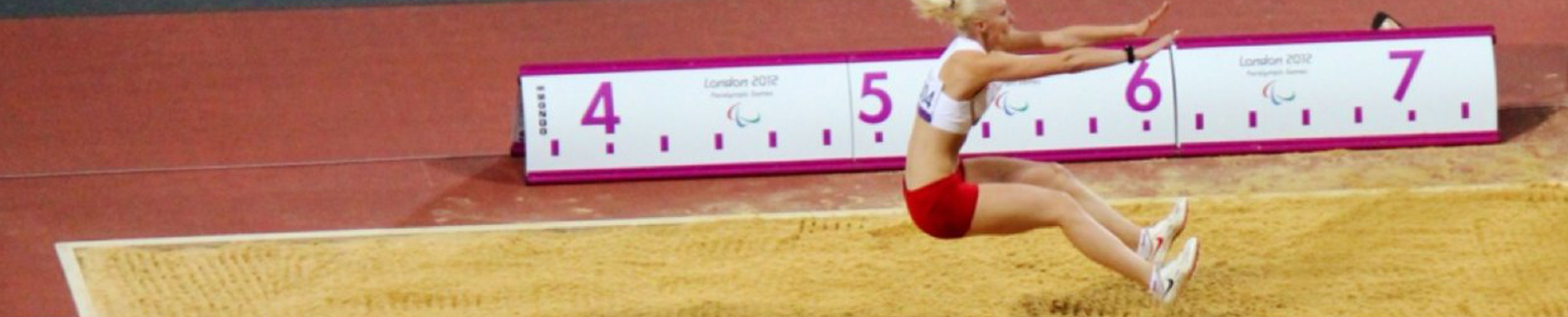
The long jump is a track and field event. Each athlete is entitled to 3 trials, with three additional jumps being awarded to the best 8 competitors. The competitor with the longest legal jump at the end of competition is declared the winner. A jump is considered valid only if the takeoff is performed at the wooden board (20 cm wide). A layer of plasticine (10 cm long) is placed immediately after the board and it should not be touched with feet, otherwise the jump is declared a foul.
The jump is measured from the front edge of the takeoff board to the nearest break in the landing area made by any part of the body or limbs. Technically, there are four phases to the jump. The run-up phase should be precise, in order to take off from the takeoff board, and it should be used to achieve maximum speed controllable by the athlete to perform a profitable jump. The last three steps are the most important ones, as they originate the takeoff that is when horizontal speed must be transformed into the highest possible elevation. The takeoff foot should try to grip the ground, body weights shifts to the forwarding limb and the trunk is straight up.
The length of the flight depends on the horizontal speed, which should be the fastest possible compatible with an elevation that preserves it. In the aerial phase, the athlete can choose between different techniques, as for example the Hitch-kick style, in which the athlete performs a few steps in the air, or the Hang style or «soaring». The most successful landing is the one that shifts the athlete’s centre of gravity as far as possible from the takeoff board, without causing him/her to fall backwards.

