
High jump
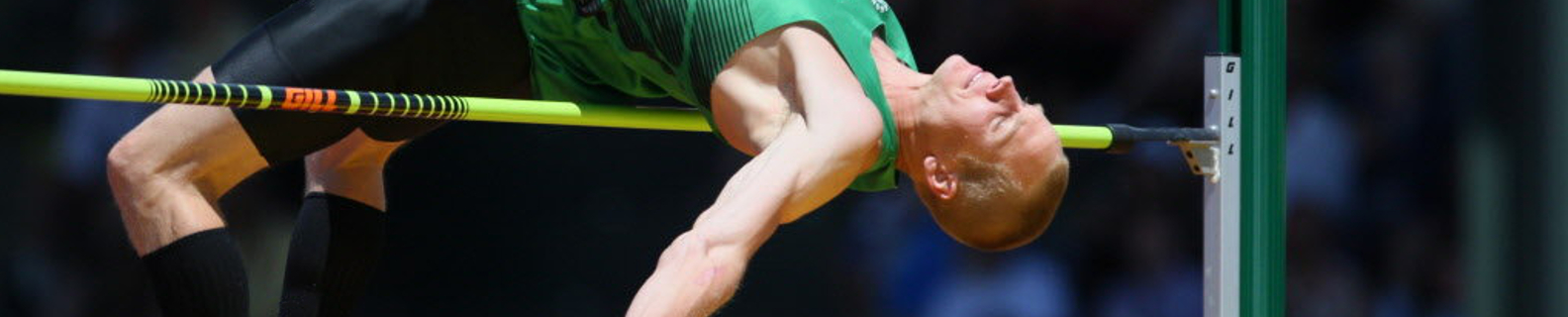
The high jump is a track and field event that can be performed using two techniques, ventral and dorsal jump. We will analyse the four phases of dorsal jumping. Most jumpers use a 8-10-step run-up. The athlete starts from the left if he/she takes off using the right foot and vice versa, that is outside of the standard (the vertical support underpinning the crossbar), along a curved line.
There are two marked areas that regulate the run-up length: a starting line and a line for the change of direction. The increase in speed should be gradual by progressively increasing the tilt of the chest, while arms create wide swings. The takeoff occurs in proximity to the bar: the takeoff foot is planted on the ground, while the other foot flexes upwards. At the same time, upper limbs move in a coordinated way, resulting in an outwards rotation on the vertical axis of the body.
The bar clearance occurs in the aerial phase by simultaneously extending legs and thighs to prevent the dislodging of the bar. The athlete lands on his/her upper back or shoulders; therefore he/she should be very careful. See also: Athletics.

