
Balance
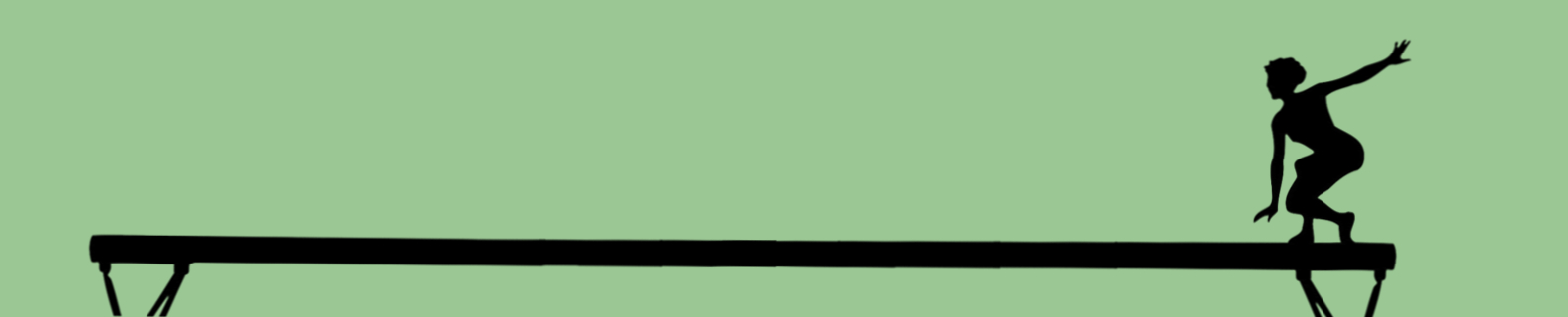
Balance is a motor skill allowing maintaining or regaining controlled
positions during both static and dynamic activities. To remain
balanced, a person standing must be able to keep the vertical
projection of his/her centre of mass within his/her base of
support. The narrower the base of support, the harder it is to
maintain balance. A more stable balance may be achieved by
shifting the centre of gravity downwards.
There are four types of balance:
- static, that is the ability to maintain control of a position whilst remaining stationary;
- dynamic, that is the ability to maintain or to restore balance and control of the body whilst moving, for example while walking;
- while rotating, that is maintained or restored either during or after rotations around the three axes of the body, as: ground rotation (longitudinal axis), front/back flips (sagittal axis), or somersaults (transverse axis);
- while jumping, that is maintained in the phase of flight and it is almost always combined to balance in rotation, as in acrobatic figures.
To train balance it is useful to perform exercises on narrow, high or unstable bases of support, requiring adjustments. It is also useful to perform exercises keeping the eyes closed: the sight provides reference points that would improve balance a lot.

