
Muscle fibre
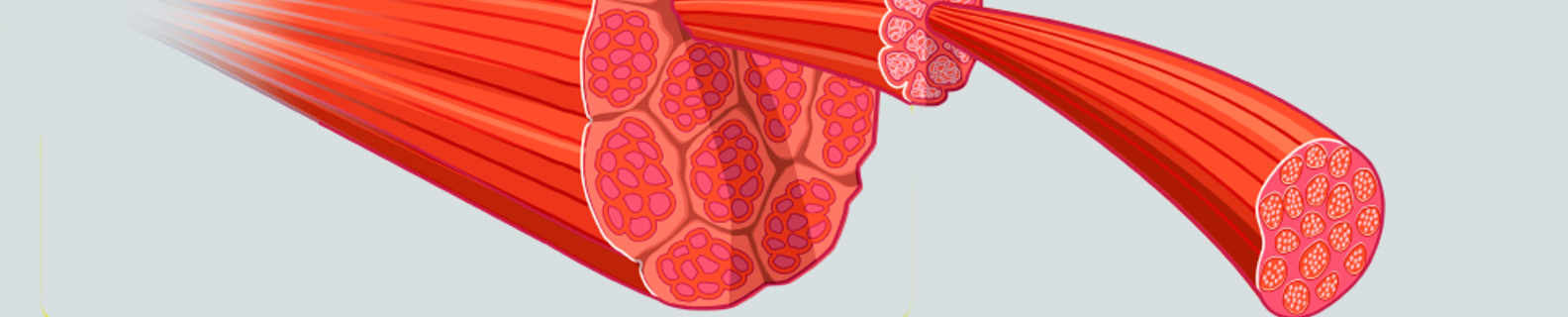
A muscle fibre is a bundle of elongated cells, which form the skeletal muscles (see muscular system). It is made up of an external membrane (called sarcolemma) which contains many smaller fibres called myofibrils that are immersed in a cytoplasmic fluid (called sarcoplasm). Sarcoplasm contains all the elements necessary to muscle fibres’ functioning, in particular, the mitochondria, which are tiny «laboratories» that regulate the release of energy for cellular functions (ATP). Sarcoplasm also contains a particular reticulum that has great importance for the transmission of nerve impulses to the fibres.
Myofibrils are composed of two types of protein filaments arranged alternately: thick filaments contain myosin, thin filaments contain actin. Myosin filaments have lateral ramifications (cross-bridges), which during contraction hook the actin filaments, as gear teeth, allowing them to fit together with the myosin fibres lengthwise. When the nerve impulse that caused the contraction stops, cross-bridges come off and the muscle fibre stretches again.
There are three types of muscle fibre, which differ in the amount of myoglobin (the protein that transports oxygen) that they contain.
- Red fibres: they contain high levels of myoglobin and mitochondria. They are slow fibres, but they contract for long periods of time and are suitable for endurance activities;
- White fibres: they contain little myoglobin, they contract quickly and powerfully, but fatigue very rapidly. They are well connected to the central nervous system by neurons conducting the stimulus very quickly;
- Intermediate fibres: they are a mix of the previous ones.

